
Omaha Surf – 2026/27 Age Group Transition FAQ
Understanding the Change
- What exactly is changing in youth soccer?
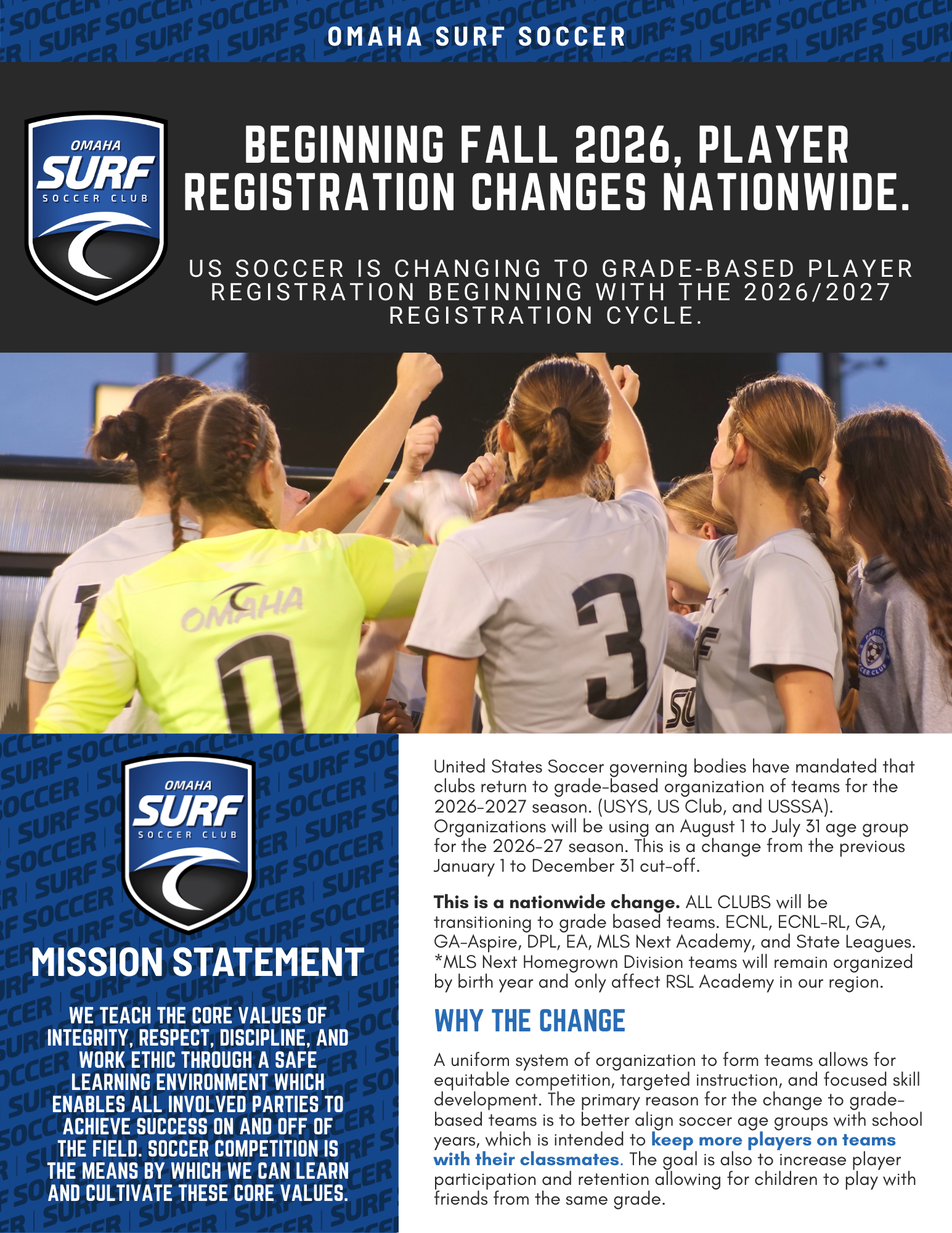
Beginning in Fall 2026, youth soccer in the United States will transition from organizing teams by birth year to organizing teams by school grade (grade year).
- Why is this change being made?
The goal is to better align youth sports with how children experience school and social development. Players will more often compete with classmates and peers from their grade level rather than strictly by birth year.
- Who decided to make this change?
The change is being implemented at the national level within U.S. youth soccer organizations, which means clubs across the country will follow the same general structure beginning in Fall 2026.
- When does this change actually take effect?
The new structure officially begins with the Fall 2026 soccer season.
- Does anything change for my child this season?
No. Players will continue playing in the current birth-year system until Fall 2026.
Team Placement & Rosters
- Will my child stay with their current team?
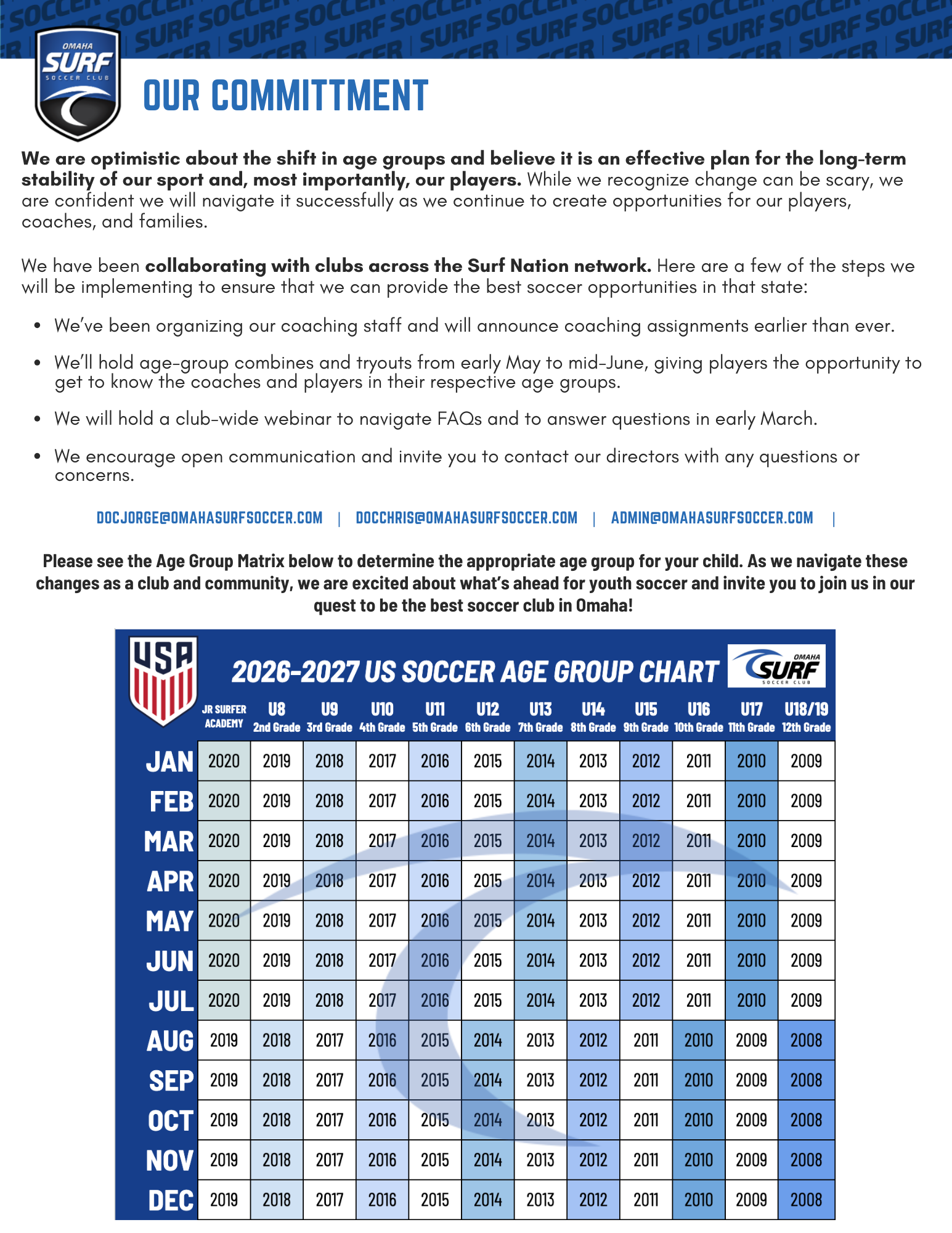
Many players will continue with familiar teammates. However, because teams will now be organized by grade instead of birth year, some players may move slightly within the structure.
- Will teams be completely reorganized?
Not necessarily. Clubs will work to maintain stable team environments whenever possible, but adjustments may occur to align teams with grade levels.
- Will my child move up or down an age group?
That depends on where their school grade falls relative to their birth year. Some players may move slightly up or down in the new structure.
- What if my child is one of the youngest or oldest in their grade?
Players will generally be placed according to their school grade, even if their birth month differs from teammates.
- Will there still be opportunities to play at the right competitive level?
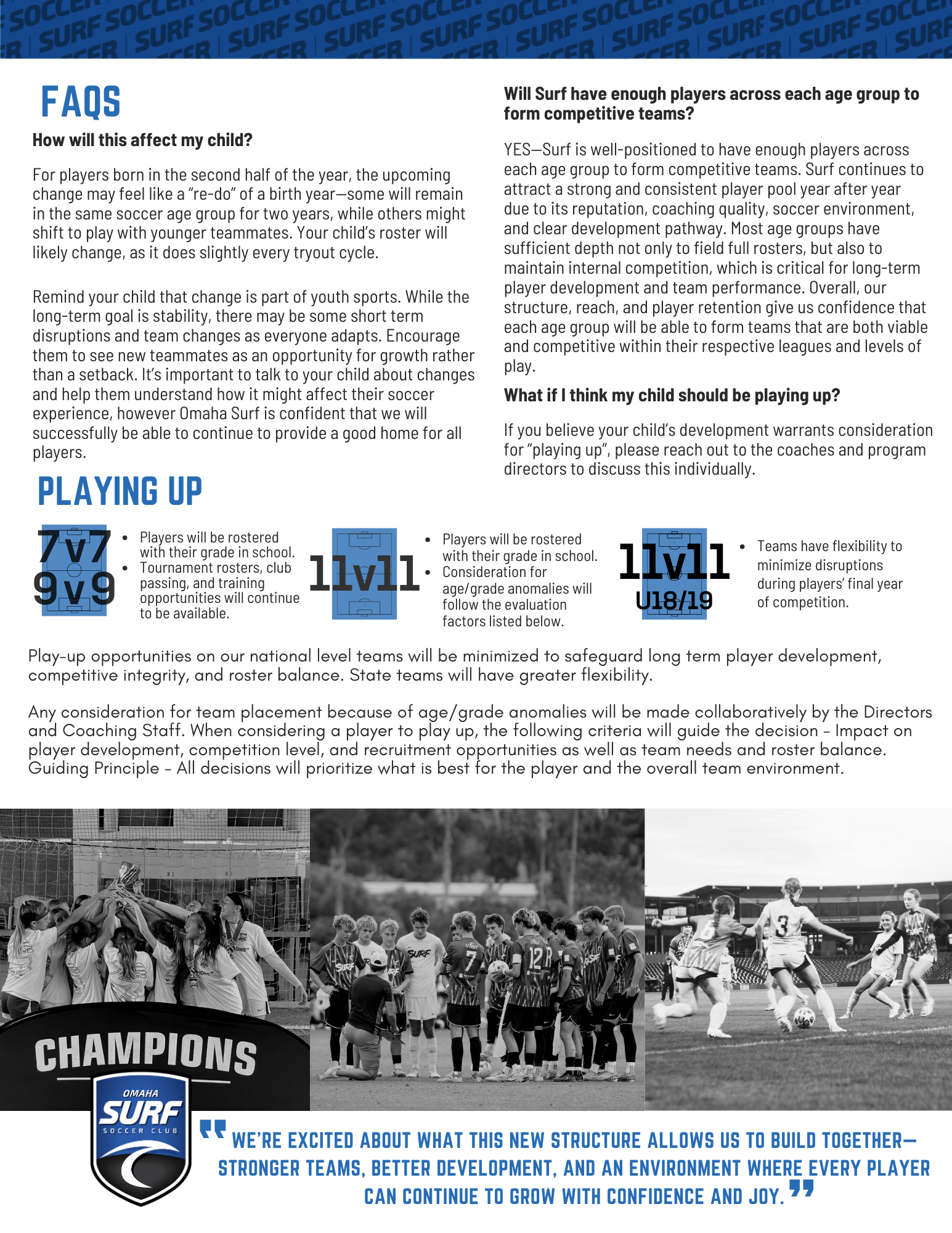
Yes. Players will continue to be placed in appropriate developmental environments based on ability, experience, and growth, just as they are today.
Player Development
- Why is Omaha Surf introducing Age Group Training now?
Age Group Training allows players to gradually experience their future age group before the change occurs, making the transition feel comfortable rather than sudden.
- Are these sessions tryouts?
No. Age Group Training sessions are not tryouts and are not evaluations.
- Will these sessions affect team placement?
No. These sessions are designed only to help players adjust and meet future teammates.
- Why is it helpful for players to train with their future age group?
It helps players:
- build familiarity with teammates
- meet coaches within their age group
- experience developmentally appropriate training
- feel confident when the change officially happens
School Grade Questions
- What if my child is homeschooled?
Homeschooled players will still be placed based on the grade level equivalent for their age group.
- What if my child skipped or repeated a grade?
Clubs will typically use the school grade the player is currently enrolled in.
- What if my child attends a private school with a different structure?
Placement will still align with the player’s grade level equivalent.
Competitive Soccer Questions
- Will leagues also change to grade-based age groups?
Yes. Leagues across the country will adjust to align with the new grade-year structure beginning in Fall 2026.
- Will tournaments change as well?
Yes. Tournaments will adopt the new structure so teams compete within the appropriate grade-based divisions.
- Will this affect college recruiting timelines?
No. College recruiting is based primarily on graduation year, which already aligns closely with grade level.
Team & Social Impact
- What happens if my child’s close friends end up on different teams?
In many cases, players will still see familiar teammates. Clubs will work to manage transitions carefully so players maintain positive team environments.
- Will this change affect team chemistry?
Because players will often compete with classmates, many teams may actually experience stronger social connections.
- Will younger players be at a disadvantage?
No. Coaches will continue to create balanced development environments, just as they do today.
Club Planning
- How is Omaha Surf preparing for this change?
Omaha Surf is preparing early by:
- introducing Age Group Training sessions
- educating players and parents
- planning team structures well ahead of the national transition
- Why start preparing now if the change isn’t until 2026?
Early preparation allows the transition to feel natural rather than sudden for players.
Parent Logistics
- Will practice schedules change because of this?
Practice schedules may adjust slightly when the new structure begins, but families will receive advance communication before any changes occur.
- Will this affect club fees?
No. The structural change itself does not affect club fees.
- Will uniforms change?
Uniform cycles are typically separate from age-group structures and follow the normal club uniform cycle.
Transition Timeline
- What should parents do right now?
Nothing changes immediately. Simply continue supporting your player throughout their current season.
- When will we know our child’s new team?
More information about team alignment will be shared closer to Tryouts.
Final Question We All Will Ask
- Is this change good for players?
The goal of the change is to better align youth soccer with how children experience school, friendships, and social development. By preparing early, Omaha Surf can ensure that the transition feels positive and comfortable for our players.